Keta Wakamiya Shrine
岐阜県/飛騨市

Description
This is a shrine whose construction date is unknown. It houses the God known as Okuninushi no MikotoMii no Kami. This place is also home to one of Japan's three Hadaka festivals (where a minimum amount of clothing, normally a loincloth) is worn, known as "Furukawa festival", which has been performed since the Edo era(1603-1868). The resonant sound of the drum rings out during the festival proceedings. There are many fans of the anime "Your name" who make the pilgrimage here in dedication to the anime piece.
Homepage
Address
Nearby Car Night Spots

Overnight stay

Overnight stay
Omachi Hot Spring "Yukemuri Estate: Yakushi no Yu"
¥500〜
/ per nightNagano Ken Taira, Omachi Shi
4.1
(27)Overnight stay
Overnight stay
Overnight stay
Overnight stay
Overnight stay

(Power supply available/facilities for rain) Apples bonfire station Fruit Garden Kitazawa
¥4,000〜
/ per nightNagano Oshima, Matsukawacho, Shimoina-gun
4.9
(22)Overnight stay
Nearby Activities
Activity
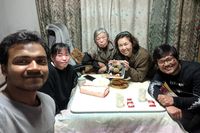
【Only foreigners】 Experience local life in Nagano
¥5,000〜
/ per personNagano Takehusa, Shinshu-shinmachi, Nagano city,
3.0
(0)Activity
Activity
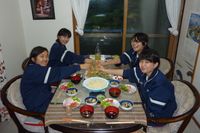
【Only Foriegn Visitors】 International exchange with handmade udon!
¥5,000〜
/ per personNagano Prefecture Shinonoi Utabi, Nagano City
3.0
(0)Activity
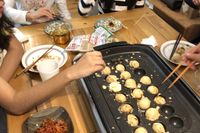
【Only Foreign Visitors】International Exchange with Takoyaki and Okonomiyaki
¥5,000〜
/ per personNagano Prefecture Wakasato, Nagano City
3.0
(0)Ranking Stations
Overnight stay

Shin Meishin Suzuka PA (inbound) RV Station Suzuka * With Power!
¥2,200〜
/ per nightMie Yamamotocho, Suzuka-shi
4.3
(172)Overnight stay

Overnight stay
Overnight stay
Tent night

Overnight stay
(Power supply available/facilities for rain) Apples bonfire station Fruit Garden Kitazawa
¥4,000〜
/ per nightNagano Oshima, Matsukawacho, Shimoina-gun
4.9
(22)Overnight stay
Nearby Drive Spots
Onsen
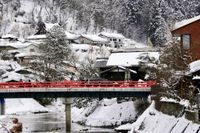
Hida Takayama Onsen
This is an Onsen near Hida Takayama. It is a new onsen that is established in an historic castle town with traditional style buildings and the Takayama Festivals. The alps become completely awash with white snow during the winter, so taking a warm bath is ideal to warm the body whilst looking out at the snowy landscape.
Spot
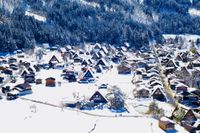
Shirakawa-go
This is a village situated in northern Gifu, and registered as a World Heritage Site. It is known as an area with one of the highest levels of snowfall, and due to this, the roofing of houses is set at a steep angle to deal with the snow fall. Some of these houses still exist nowadays, and are still in use.
Onsen
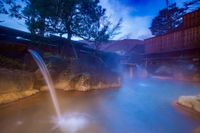
Oku Hida Onsen
This is a hot spring deep in Oku Hida. It is situated in the northern alps, and was admired by Shingen Takeda during the Sengoku era(1467-1600), as an onsen with the third most plentiful amount of spring water. The onsen is unique in that there is a free communal bath area with many different types of baths.
Spot
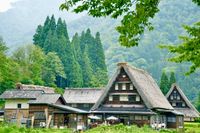
Gokayama Gassho no Sato
This is a famous settlement in the southern part of Toyama prefecture, and listed as a World Heritage Site. It is known for particularly heavy snow fall, and the buildings have particularly steep sloped roofing to adapt to this climate. The area is also particularly unique for its frequent traditional folk dances that take place here.
Onsen
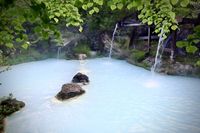
Shirahone Onsen
This is a hidden away hot spring in the vicinity of Kamikochi in the west part of Nagano prefecture. It has always been well known as a place of healing, and it is said that one will not catch a cold if one enters the milky white water for three days. It is a secluded hot spring town with a quiet atmosphere, with several inns and places to eat around the local area.
Spot
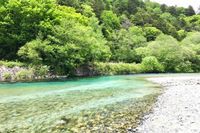
Kamikochi
This is a scenic spot with an altitude of 1500 m in the southern part of the Hida Mountain Range. It has many sightseeing spots such as Azusa RiverKappa BridgeMyojin PondTakesawa WetlandsTashiro Pond. As there are only a few such plains spread out in Japan to this extent, many tourists flock to this area to see the rare scenery. The area is also the habitat of the Japanese monkey, Char Fish, and Genji firefly.
Spot
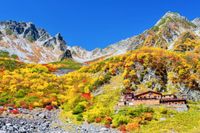
Karasawa Curl
This is the largest glacier valley in Japan at the southern part of the Hida mountain range. There is a stunning view between Mount Okuhogatake and Mount Maehogatake due to their height difference of about 1,000 meters. The area has become popular for autumn leaf viewing in recent years, and the trees, known for their "three stage" autumn leaves offer an interesting contrast to the surrounding rocky area.
Spot
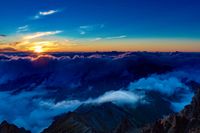
Mount Yarigatake
Located at the southern part of the Hida mountain range, this is Japan's 5th tallest mountain at 3,180 meters. As the name suggests, the mountain has an unusual shape resembling a spear that is being cast to heaven. This has earned it the nickname of "Japan's matterhorn". The sunrise and sunset views with the sea of clouds below captures the hearts of many climbers.
Spot
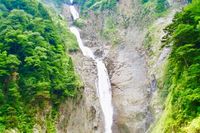
Shomyo Falls
This is Japan's tallest waterfall at 350m, in the Tateyama mountain range. The name comes from the fact that a Priest named Hounen heard the voice that called "Shomyo Nenbutsu " from the sound of the waterfall.
Onsen
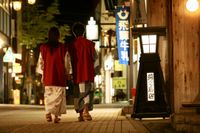
Gero Onsen
This is a famous hot spring in Gero City. With 1000 years of history, it is named as one of Japan's three best onsen, by Hayashi Razan, a neo-Confucian philosopher. There were many times where the area was destroyed by floods of the Hida River, but it was restored each time, and there is a full onsen town along the river. Hoba Miso paste (made from Magnolia leaf) is a specialty product in this area.※Credit:下呂温泉観光協会
Spot
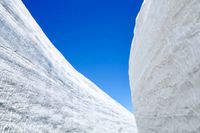
Yuki no Otani
This is an Alpine route of the Tateyama Kurobe mountain range. As snow has to be cleared aside in the heavy mountain zone of Toyama in around March, visitors can see the spectacular snow walls in April and May, with a height of 15-20m.
Spot
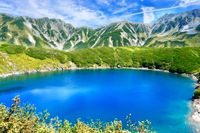
Mikurigaike Pond
This is a crater lake at altitude 2,405 meters formed by the volcanic activity of Tateyama volcano, in Murodo-daira. In Tateyama faith, the name has the meaning of "God's kitchen" and the pond's water ownership was bequeathed to Tateyama. For those practicing religion in this area, it became known as holy water.
History
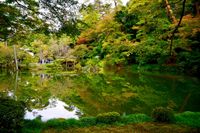
Kenrokuen Garden
This is one of the three Japanese gardens which was built by Maeda Tsunanori in 1676. Originating from the clan garden which was built at the outskirts of Kanazawa Castle by the Kaga clan, the park was named by Matsudaira Tadanobu who named it as such due to the six elements of spaciousness, tranquility, artifice, antiquity, water courses, and a magnificent view from the garden.The area also has been rated with 3 stars from the Michelin Tour guide, and is one of Japan's most splendid parks that can be enjoyed all year around due to the plum and cherry blossoms, autumn leaves and snow views.
Spot
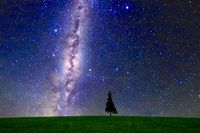
Rokuroshi Kogen
This is a plateau located at the foot of Mt.Kyogatake mountain range and extends to an altitude of about 400 to 700 m. It forms a gentle fan-shaped terrain, and the night sky is ideal for star gazing. In addition, visitors can enjoy seeing the dairy cattle grazing, barbecues, and outdoor baths etc.
History
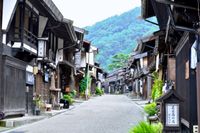
Narai-Juku
This is the 34th town inn which is located on the Nakasendo road, which links Tokyo (Edo at the time) and Kyoto, built during the Sengoku era(1467-1600). Situated just past the Torii gate in a perilous spot, the inn town became known as the "Narai of 1000 hotels" by many travelers. During the Edo period(1603-1868), the woodwork industry became prolific in the area with wooden crafts and lacquering, and is popular as a souvenir spot today.
History
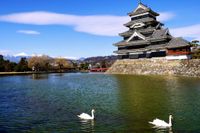
Matsumoto Castle
This is a castle build by Ogasawara clan in 1504. It is famous as one of Japan's only 12 castle towers and is one of 5 which has been designated as a national treasure by the Japanese government. The castle was taken into ownership by Ishikawa Kagumasa in 1590, and it is said that he painted the castle jet black to express loyalty to the castle lord, and became famously known as the "Crow castle".
Onsen
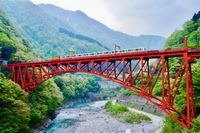
Unazuki Onsen
This is a secret onsen in Kurobe Valley, that is part of the local valley river and was visited by Emperor Showa as well as Yosano Akiko. The area is also a popular tourist spot to see the Kurobe Gorge railroad and view the spectacular landscape. The area is particularly popular in summer for the greenery and in autumn for the autumn leaf viewing.
Onsen
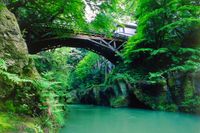
Yamanaka Onsen
This is a traditional bath in Kaga City. It boasts 1,300 years of history and was known as an Onsen loved by Matsuo Basho. The spa town is located along the "Kakusenkei" valley of the Daishoji River, where you can enjoy the countryside landscape with its mountains, valleys and rivers.※Credit:石川県観光連盟
Spot

Monet's Pond
This is a reservoir in Nezu Shrine, in Gifu. From 1999, various species of waterlily such as the pygmy lily and spatterdock lily were planted here, and koi carp, which were initially not available in the area, were brought over and bred in this area. Due to this series of events over time, the area ended up resembling the lily ponds illustrated by Claude Monet.
Onsen
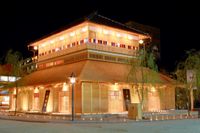
Yamashiro Onsen
This is a traditional bath in Kaga City. It boasts 1,300 years of history and was visited by prominent figures such as Akechi Mitsuhide during the Sengoku era(1467-1600), and Kitaoji Rosanjin and Yosano Akiko during the Meiji era(1858-1912). After the war it developed quickly into a recreational bath house. Soyu and Kosoyu are two of its famous public baths. ※Credit:石川県観光連盟